
“And ye shall offer for a sacrifice unto me a broken heart and a contrite spirit”
3 Nephi 9:20

When you think of or hear the word “sacrifice” what comes to mind? I know for some, it is giving up something good for something of a better value. It is giving up their time or means to help another. To others, especially historians, they may think of sacrifice as it was in Biblical times when sacrifices consisted of “offering the firstlings of their flocks in a similitude of the sacrifice that would be made of the Only Begotten Son of God” (Bible Dictionary, Sacrifice). Today, we are not expected to sacrifice like what is stated in the Bible, but we are asked to sacrifice in other ways. Sometimes it includes external stuff such as giving up a coat to cover the shoulders of a loved one who is cold. Sometimes it is an even bigger sacrifice such as giving money to someone in true need, which you had been saving up for a long-awaited vacation. What I talk about today is the deep, internal sacrifices that are made in order to become the person we intend to be, and the person God knows and desires us to be. Specifically, for this post, I talk of sacrifices that must be made for a marriage to thrive and progress.
Last week I spoke a little bit on how the generation today thinks more individually than collectively. This isn’t all bad. However, when these individuals eventually find themselves in a relationship and marriage, thinking individually creates problems because there is no willingness to let go of ourselves and work with another person. I also shared some thoughts about how I had to let go of my own perspective so that I could work alongside with my husband and find some common ground. Doing this has helped us both understand more of each other, but it didn’t come without a price. In his book, Drawing Heaven into Your Marriage, H. Wallace Goddard speaks about how “sacrifices are not sacrifices, but purchases” (Goddard, 2009). What he means is that when we are being obedient and letting go of our own preferences, Heavenly Father blesses our lives with more than we can ask for. As stated by Goddard, “God rewards us with eternal joy” (2009). In the grand scheme of things, what we sacrifice is nothing compared to the blessings we get for doing it. It almost seems like a steal! So how does this tie into marriage and what we give up in our relationships?
Marriage is a ‘give with the hope of some kind of return’, type of exchange. You get out of it what you, yourself, are willing to put into it. If you enter a relationship thinking that it is all about you, you will soon find that it won’t be that way at all, and the relationship will ultimately end. However, if you enter a relationship with the understanding that there will be hard work involved and that you will have to think of another person above yourself, sometimes, then the chances of the relationship surviving are greater. In a marriage, when you sacrifice, you are actively and deliberately choosing to let go of whatever it is for the benefit of your spouse, and you will find that will eventually be for the benefit of you too. But it isn’t just for the one. All spouses, in a “perfect” marriage, should both work at sacrificing and giving to the other. I share only what I know from my own personal experiences and cannot speak for how my husband feels. Although, I am confident that he too, sacrifices for the sake of me and our marriage, just as much as I do. With that, I’d like to share a few thoughts and examples of sacrifices that I have made to help keep my relationships going strong.
I first start with my perception of my husband. In the beginning, there were the natural thoughts of his physical features and how handsome he was. I could see he was a good father, and a dedicated man to his job. There were other qualities about him that shined. However, after marrying him and getting to see more of how he deals with things, there were some other perceptions, and not always nice ones, that would come up. There were things that he did that were quite annoying and they began to bring my mind to focus on his flaws and faults. At times I would be so angry, that it became hard to see any good. It got to be so bad that I felt like these thoughts consumed my life way more than I wanted. How could I think of these things about a man that I had love for? Why were they taking over any good thoughts I tried to have? I wanted to see my husband in the way that I had seen him before. I knew that in order to feel a deeper love for him and to lessen the angry feelings I had towards him, I needed to have a change of heart and mindset. I also knew that I could not just change it by myself. I had to turn to Heavenly Father and “pray earnestly for the heavenly help to make those sacrifices that will sanctify [my] relationship” (Goddard, 2009). So, I went and prayed. I actively sought for God to change my heart and to help me find joy and admiration for my husband. I asked Him to open my eyes so that I could see my husband the way He sees him.
This did not just happen overnight. Although, sometimes I think we all wished our prayers worked that way. I of course had hoped that something would occur the next day, but it didn’t. I was expecting this miraculous change of mind and I certainly should have known better. This willingness to sacrifice my own perceptions was going to be a great task, and one that is bound to continue my whole marriage. To make changes, we must consciously make decisions everyday to work at it. Goddard states,
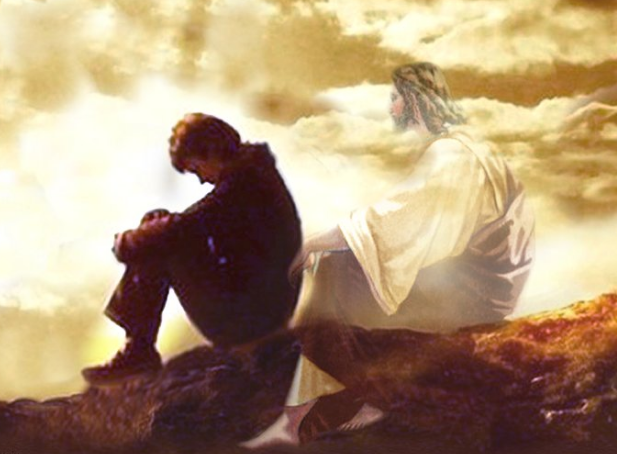
“Every day we decide anew whether to live by the guidelines of the mind of Christ or the imperatives of the natural man. Every day, every hour we decide whether we will continue to sing the song of redeeming love – or whimper in discontent. Every day we must choose”(emphasis added).
I was going to have to decide EVERY DAY, EVERY HOUR, EVERY MINUTE, what my thoughts of my husband were going to be. At the same time, I knew that as I sacrificed my negative perceptions for better ones, the Lord would bless me with the strength I needed, and lots more understanding. Because of those sacrifices I was willing to make, I was purchasing something that had far greater value than I could have ever imagined. And that was to see the great qualities I had previously known my husband to have before the negative took over. Doing this, I was also building a strong fondness of him and our marriage, which would improve our relationship.
John M. Gottman states that “the key to reinvigorating fondness and admiration is to get in the habit of scanning for qualities and actions that you can appreciate. Search for the small, everyday moments” (emphasis added) (Gottman, 2015). Making these little changes every day, scanning for the small, positive moments, and doing this with Christ and my husband in mind, I knew then and will always know that this is a far greater benefit to obtain then the perceptions I had before. I know that because sacrifices have been made to change my point of vision, I see my marriage and my husband in a different, more heavenly way, which is the purchase I paid then and continue to pay for every day. I do this not because I want to be a doormat, nor do I feel like one. I do it because finding those good, positive thoughts about my husband, and others, makes me feel good. It is worth going through the hard to reap the good reward, which is worth so much more than we can fathom. I end with this phrase from H. Wallace Goddard,
“It takes character to see errors in a partner’s grammar or perceptions and yet resist the temptation to correct needlessly. It takes godly goodness to see weakness and mistakes in our partners and yet resist the temptation to smirk. It takes heavenly humility to be proven right and yet to meekly acknowledge that we all make mistakes” (2009).
REFERENCES:
Goddard, H. W. (2009). Drawing heaven into your marriage. Ceder Hills : Joymap Publishing.
Gottman, J. M. (2015). The seven principles for making marraige work. New York : Harmony Books .
 YoursplusOurs4Eternity